

DEPRESSION
Advertisement
Depression is a short story-focused game about a person who once found meaning through art. The main character, an artist, now faces a complete absence of inspiration. The ability to draw has faded, and with it, the connection to the world. The game begins in a space that reflects this mental state—still, quiet, and empty of direction. Players are asked to explore this environment with no clear goal except to move forward.
Advertisement







Similiar games




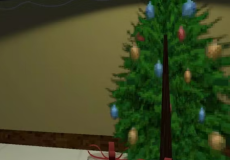



Depression is a short story-focused game about a person who once found meaning through art. The main character, an artist, now faces a complete absence of inspiration. The ability to draw has faded, and with it, the connection to the world. The game begins in a space that reflects this mental state—still, quiet, and empty of direction. Players are asked to explore this environment with no clear goal except to move forward.
Encounters That Invite Change
While much of the game takes place alone, there are moments where the player can speak with neighbors. These characters do not offer answers but serve as brief interruptions from isolation. Talking to them becomes part of the rhythm of the day. Some players may ignore them, while others may choose to engage. What happens next depends on how much effort is made to connect with others in small ways.
- Move with W, A, S, D
- Interact using E
- Look around with the mouse
- Advance dialogue using space
- Run when permitted by holding shift
A Choice That Only Happens Once
At a key moment, the player is presented with an opportunity labeled as a chance. This can only be attempted once, and the game makes that clear. There is no way to repeat the action or go back. The outcome depends not on skill, but on the willingness to act without knowing what will follow. This decision creates a shift in the tone and pacing of the game, with everything leading toward one outcome or another.
Visuals, Dialogue, And Internal Space
The world of the game is not large, but it reflects the mental space of the character. The environment changes slightly in response to decisions, though not always in ways that are obvious. Dialogue is short and often leaves room for interpretation. The visual effects include moments of distortion and flashes that signal transitions in thought or emotion. These elements reflect the internal state of the protagonist without spelling it out.
A Brief Game With Long Meaning
Depression can be finished in a short session, but its content is not simple. The subject matter includes isolation, loss of direction, and the difficulty of connection. There are no multiple endings or unlockables. Instead, the game offers one path that moves through small interactions, hesitation, and the single decision that cannot be undone. Players are left with space to reflect rather than a message to decode.
Discuss DEPRESSION

