

Overcome Your Fears – Caretaker
Advertisement
Overcome Your Fears – Caretaker places the player in the role of Steve Jackson, a nineteen-year-old who accepts a temporary house-sitting job while his friends are away. The assignment appears routine: check the rooms, make sure the power works, and keep the place secure. The space feels calm at first, but as you move through the house, the sense of order starts to weaken. Each step forward raises questions about what you are really watching over — the house, your own thoughts, or something hidden in between.
Advertisement











Similiar games







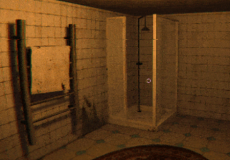
Overcome Your Fears – Caretaker places the player in the role of Steve Jackson, a nineteen-year-old who accepts a temporary house-sitting job while his friends are away. The assignment appears routine: check the rooms, make sure the power works, and keep the place secure. The space feels calm at first, but as you move through the house, the sense of order starts to weaken. Each step forward raises questions about what you are really watching over — the house, your own thoughts, or something hidden in between.
Environment and Perspective
The game is presented from a first-person perspective and unfolds inside a small suburban home. The environment is confined but detailed enough to encourage exploration. Light sources, furniture placement, and ambient noise play a role in shaping how the player experiences time inside the house. Every sound or flicker invites a closer look, and the more you investigate, the more uncertain the surroundings become. The world does not rely on fast action but on how small changes accumulate over time.
Movement and Interaction
Overcome Your Fears – Caretaker uses minimal controls to keep focus on observation and awareness. The player interacts directly with objects and navigates through different rooms at their own pace.
· Move with W, A, S, D
· Run with Shift
· Crouch with C
· Interact or pick up items with E
· Drop held objects with G
These controls frame the experience as a sequence of small tasks. You open doors, switch lights, examine details, and react to environmental shifts. Some choices lead to alternate outcomes or hidden sequences that reveal new information about Steve’s situation. The mechanics are simple, but their effect depends on attention and memory.
Structure and Intention
Overcome Your Fears – Caretaker follows a gradual narrative rhythm rather than a linear plot. The story develops through movement and discovery, not through dialogue or exposition. The role of caretaker becomes symbolic — instead of protecting the space, the player ends up confronting the uncertainty that lives inside it. Routine turns into repetition, and repetition becomes unease. The house slowly transforms from a safe environment into a test of how much the player can trust what they see.
Development and Future Direction
The current version of Overcome Your Fears – Caretaker is a demo that introduces the core structure and atmosphere of the project. The developer intends to expand the story with new locations, characters, and alternate endings. The demo already includes a secret conclusion, suggesting a layered design that rewards exploration. The project aims to study the relationship between fear, familiarity, and the human tendency to seek order in closed spaces. Each session begins the same way but ends depending on how carefully the player chooses to look.
Discuss Overcome Your Fears – Caretaker

