

Van Stalker
Advertisement
Van Stalker begins on a quiet evening. You play as Max, a teenager left home alone while his parents are away. The night feels ordinary until he notices a van parked across the street. At first, it seems random, but it does not leave. Each time he looks outside, the van appears in a slightly different place—closer, yet still silent. The lights flicker, the engine hums faintly, and its presence becomes impossible to ignore. The world outside the house turns into a moving trap where safety depends on awareness and timing.
Advertisement











Similiar games







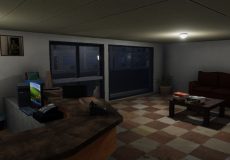

Van Stalker begins on a quiet evening. You play as Max, a teenager left home alone while his parents are away. The night feels ordinary until he notices a van parked across the street. At first, it seems random, but it does not leave. Each time he looks outside, the van appears in a slightly different place—closer, yet still silent. The lights flicker, the engine hums faintly, and its presence becomes impossible to ignore. The world outside the house turns into a moving trap where safety depends on awareness and timing.
The Nature of Pursuit
The game revolves around evasion and observation. The van does not chase openly; it follows from a distance, keeping you in sight. Movement becomes deliberate—you must choose when to explore and when to stay still. The player navigates through the house and surrounding streets, managing visibility and risk. Every door opened or curtain moved carries consequence. Van Stalker builds tension through uncertainty rather than confrontation. The van’s slow persistence replaces the traditional enemy, creating a sense of danger that grows without sound or warning.
The Structure of Play
The gameplay can be summarized as a cycle of action and reaction built around limited control and observation:
· Explore the environment to gather information about the van’s behavior.
· Manage line of sight by closing windows or hiding behind cover.
· React quickly when the van relocates or blocks your path.
· Balance caution with progress to avoid stalling.
· Endure until dawn or until contact becomes unavoidable.
This structure ensures that progress depends on awareness, not power. The game rewards attention more than aggression.
The Compression of Space
As time advances, the space you inhabit begins to shrink. Routes that were once safe become dangerous. The van appears where it logically shouldn’t, defying orientation and distance. It corners you by eliminating exits one by one. The streets feel shorter, and the house turns into a maze of windows you no longer trust. The illusion of choice disappears. The only question that remains is whether the van moves on its own or responds to what you think.
Discuss Van Stalker

