

Slow Roads
Advertisement
Slow Roads is a browser-based driving simulation developed as a continuous and procedural experience. The game focuses on open-ended driving rather than competition or objectives. Players move through automatically generated landscapes that extend infinitely, providing a setting for uninterrupted motion. The design removes the pressure of time or goals, leaving only the act of driving and the interaction between road and environment.
Advertisement




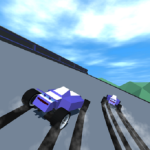








Similiar games





Gameplay Structure
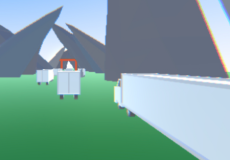
The gameplay of Slow Roads is centered on a single mechanic: driving forward. Players control a car that travels through roads which curve, rise, and descend across different terrains. The scenery changes dynamically, showing hills, valleys, and open plains generated through procedural algorithms. There are no races, checkpoints, or opponents. The challenge lies only in maintaining balance, staying on the road, and controlling speed on uneven paths. The controls are minimal, making the experience accessible to any user with a web browser.
Core Features
The main features of Slow Roads focus on accessibility and dynamic environment creation. The game relies on procedural generation to ensure that no two drives are the same. The technology behind it allows the road and terrain to be built in real time while the player continues driving. The primary elements include:
- Infinite roads generated through procedural systems
- Changing terrain and weather conditions
- Basic control system with adjustable camera views
- Browser-based access without installation
Technical Foundation
Slow Roads runs entirely in the browser using 3D rendering frameworks optimized for real-time generation. The focus of the design is performance stability and continuous rendering without loading screens. Players can adjust visual settings such as terrain detail and render distance depending on hardware capacity. The simulation operates efficiently on most devices, showing how modern web technology can support real-time 3D environments. The simplicity of the interface allows it to be used as a quick interactive experience or a longer session of free exploration.
Slow Roads demonstrates how a single mechanic can form the basis of a complete experience. By removing traditional gameplay elements like scoring or progression, it becomes a study in motion and repetition. The continuous generation of new terrain ensures that each session remains unique. The project shows how procedural design and browser accessibility can create sustainable interactive environments built on minimal structure and maximum continuity.
Discuss Slow Roads

