

Radiolight
Advertisement
Radiolight is a story-driven exploration game that focuses on discovery through sound and light interaction. Players move through a world filled with echoes, frequencies, and signals that guide their path. Instead of relying on combat or puzzles in the traditional sense, Radiolight uses environmental sound to reveal clues and illuminate progress. The game encourages observation and careful listening, turning each environment into a living map that reacts to player input. The experience blends direction, timing, and pattern recognition, creating a structure centered around perception and exploration.
Advertisement












Similiar games






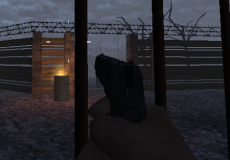
Radiolight is a story-driven exploration game that focuses on discovery through sound and light interaction. Players move through a world filled with echoes, frequencies, and signals that guide their path. Instead of relying on combat or puzzles in the traditional sense, Radiolight uses environmental sound to reveal clues and illuminate progress. The game encourages observation and careful listening, turning each environment into a living map that reacts to player input. The experience blends direction, timing, and pattern recognition, creating a structure centered around perception and exploration.
Gameplay Principles
In Radiolight, progression depends on detecting signals hidden in the surroundings. Players use a portable transmitter that emits light and captures radio frequencies, allowing them to navigate spaces filled with distortion and interference. As the story unfolds, each signal corresponds to memories or events linked to the world’s history. The absence of direct dialogue means that every clue must be interpreted through sound and movement. The player’s tools act as both compass and translator, transforming invisible energy into visible paths. The simplicity of control highlights the importance of rhythm and precision.
Core Elements
Radiolight introduces several systems that define its mechanics and structure:
· Dynamic sound mapping that reacts to player movement and signal range
· Light-based navigation tools replacing traditional objectives
· Environmental storytelling through frequency detection
· Gradual world unlocking tied to signal clarity and resonance
These elements combine to form a progression loop where exploration directly influences understanding. Instead of using fixed checkpoints or linear paths, the game rewards careful tuning of frequency and light synchronization. Each discovery becomes part of a growing network that connects the player’s location to previously unexplored regions.
Structure And Progression
The world of Radiolight is divided into regions defined by unique sound signatures. Some areas are silent, requiring the player to generate their own frequency, while others are filled with interference that hides vital signals. Advancement depends on refining the transmitter’s accuracy and learning how different materials and environments affect resonance. The story gradually unfolds through decoded fragments—recordings, transmissions, and visual distortions that form a timeline of events. The player’s understanding of the narrative deepens not through exposition but through observation.
Radiolight stands out as a game centered on sensory awareness rather than action. By making sound a tangible form of navigation, it transforms hearing into a primary tool for exploration. The interplay between light and signal builds a structure that values patience and perception, turning each location into a space of interpretation. Radiolight demonstrates how minimal systems can form a cohesive, atmospheric experience focused on understanding rather than conquest.
Discuss Radiolight

