

Only Faces Remain
Advertisement
Only Faces Remain follows the short journey of Marlene, a traveler who chooses a budget motel as a temporary stop during her trip. The game introduces its scenario through a modest room and a simple objective: settle in and prepare for the night. The player begins in an environment that appears routine, but the atmosphere changes gradually as small details begin to shift. This structure sets the stage for a short psychological experience built around movement, observation, and subtle narrative cues.
Advertisement












Similiar games





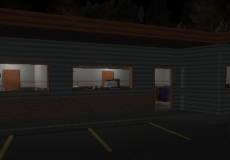
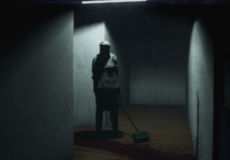

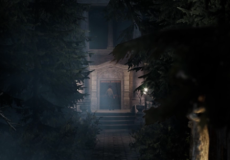
Only Faces Remain follows the short journey of Marlene, a traveler who chooses a budget motel as a temporary stop during her trip. The game introduces its scenario through a modest room and a simple objective: settle in and prepare for the night. The player begins in an environment that appears routine, but the atmosphere changes gradually as small details begin to shift. This structure sets the stage for a short psychological experience built around movement, observation, and subtle narrative cues.
Story Progression and Player Interaction
Gameplay relies on basic navigation and environmental inspection. There are no intricate mechanics; instead, the player learns about Marlene’s situation through changes in surroundings, short sequences, and visual hints. The motel room becomes the main point of interaction, with the player moving across a limited number of areas. Each transition introduces new information, sometimes through objects and sometimes through brief moments that alter the rhythm of the scene. The story moves forward without dialogue, depending entirely on what the player sees and hears.
Core Elements of the Experience
Only Faces Remain is constructed around several key components that define its short run:
· a minimal environment focused on a motel room and adjacent areas
· navigation-driven progression with simple movement controls
· subtle audiovisual moments that shift the tone
· environmental storytelling without direct explanation
· a brief structure aimed at delivering a compact narrative
These elements shape the experience as a contained slice of psychological horror that avoids overt complexity.
Presentation, Sound, and Spatial Layout
The visual design uses plain textures and narrow spaces to guide attention toward specific details. Lighting changes and spatial layout help form the pattern of the player’s movement, pushing them toward certain viewpoints at key moments. Sound plays an important role, offering cues that influence the player’s sense of direction and timing. Soft noises, distant echoes, and sudden shifts in ambience create a rhythm that alternates between stillness and tension. The environment feels controlled, with every small change placed to maintain the pacing.
Only Faces Remain presents a short but focused scenario driven by atmosphere rather than mechanical depth. It introduces a single location, a single character, and a single night’s events, using these constraints to shape a controlled experience. Players looking for short narrative-driven horror may find the demo’s structure effective. Its slow progression, limited environment, and subtle audiovisual cues come together to form a brief psychological sequence that leaves room for interpretation while maintaining a clear emotional direction.
Discuss Only Faces Remain

