

Hello Neighbor
Advertisement
Hello Neighbor is a stealth-based puzzle game where the player explores a residential house to uncover hidden areas and information. The game places the player in a first-person view and focuses on observation, experimentation, and indirect interaction. Progress depends on understanding the layout of the house and learning how different objects and systems interact. There are no traditional levels; instead, the environment itself changes as the player advances.
Advertisement










Similiar games




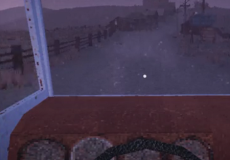



Hello Neighbor is a stealth-based puzzle game where the player explores a residential house to uncover hidden areas and information. The game places the player in a first-person view and focuses on observation, experimentation, and indirect interaction. Progress depends on understanding the layout of the house and learning how different objects and systems interact. There are no traditional levels; instead, the environment itself changes as the player advances.
Exploration And Player Goals
The main objective in Hello Neighbor is to access restricted parts of the house while avoiding direct confrontation with the homeowner. The player enters the house repeatedly, each time attempting to reach new rooms or solve environmental obstacles. Doors, locks, and barriers block progress and require specific tools or actions to bypass. Exploration is not guided by markers, so players must rely on memory and spatial awareness to navigate effectively.
Stealth And Adaptive Behavior
A central mechanic of Hello Neighbor is stealth. The player must move carefully, manage noise, and use hiding spots to avoid being caught. The homeowner responds dynamically to player actions, changing patrol routes and behaviors based on previous encounters. This creates a feedback loop where repeated strategies become less effective over time, encouraging varied approaches.
Core gameplay elements include:
· Environmental puzzles tied to objects and physics
· Stealth movement and hiding mechanics
· Item collection and contextual use
· An AI-controlled opponent that adapts to behavior
· A changing house layout across progression stages
These systems work together to shape moment-to-moment decisions.
Puzzle Structure And Interaction
Puzzles in Hello Neighbor are integrated directly into the environment rather than presented as separate challenges. Solving them often requires combining items, activating mechanisms, or observing cause-and-effect relationships. Some solutions are not immediately clear, and trial and error plays a role in learning how systems function. Because items persist between attempts, players gradually build knowledge even after failure.
Progression And Environment Changes
As the player reaches new milestones, the structure of the house evolves. New floors, rooms, and mechanics are introduced, altering how spaces are used. This progression is tied to discovery rather than completion metrics. The changing environment requires players to reassess familiar areas and adapt to new layouts without explicit instruction.
Discuss Hello Neighbor

