

Ice Scream 1
Advertisement
Ice Scream 1 is a first-person puzzle adventure built around exploration, avoidance, and observation within a confined neighborhood setting. The player controls a child who witnesses an abduction and attempts to investigate without being detected. Progress is driven by navigating familiar spaces that gradually reveal new interactions. The game does not rely on direct instruction, requiring players to learn through repeated movement and environmental cues.
Advertisement









Similiar games




Ice Scream 1 is a first-person puzzle adventure built around exploration, avoidance, and observation within a confined neighborhood setting. The player controls a child who witnesses an abduction and attempts to investigate without being detected. Progress is driven by navigating familiar spaces that gradually reveal new interactions. The game does not rely on direct instruction, requiring players to learn through repeated movement and environmental cues.
Neighborhood Layout And Exploration Flow
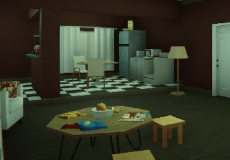
The primary setting in Ice Scream 1 consists of streets, buildings, and interiors connected in a compact layout. Areas are unlocked gradually as the player finds keys or completes indirect actions. Movement through the environment emphasizes awareness of sightlines and sound, as visibility affects detection. Backtracking is frequent, but each return visit serves a functional purpose by enabling access to newly available routes. The layout encourages memory and planning rather than speed.
Stealth Mechanics And Threat Presence
Stealth forms the core challenge in Ice Scream 1. The antagonist moves through the environment according to simple but consistent rules, responding to noise and line of sight. The player is not equipped to confront threats directly, making avoidance the primary strategy. Hiding spots and environmental obstacles provide temporary safety, but improper timing can reset progress. This system reinforces cautious movement and deliberate pacing.
In the central portion of gameplay, players commonly focus on the following actions:
- Observing patrol patterns to plan movement
- Collecting items required for access or interaction
- Using hiding places to avoid detection
- Navigating interiors without making noise
- Returning to safe areas to reassess routes
Puzzle Design And Item Usage
Puzzles in Ice Scream 1 are integrated into the environment rather than presented separately. Items collected throughout the map must be used in appropriate locations, often requiring players to interpret context rather than follow prompts. Solutions are typically straightforward once the correct interaction is identified, but finding that interaction requires exploration. The game relies on logical placement of objects and clear cause-and-effect relationships.
As progression continues, the player gains access to more of the environment, increasing navigation options while maintaining the same core mechanics. The rules governing stealth and interaction remain unchanged, allowing players to focus on applying learned behavior rather than adapting to new systems. This consistency supports gradual improvement through familiarity.
Discuss Ice Scream 1

