

Strange Jigsaws
Advertisement
Strange Jigsaws is a puzzle game that approaches the jigsaw format as a framework rather than a fixed rule set. Instead of asking the player to assemble a single image through shape matching, the game presents a sequence of independent challenges, each built around its own internal logic. Puzzles differ in structure, objective, and interaction rules, requiring players to understand how each one functions before attempting a solution. The game focuses on reasoning and observation rather than speed or reflexes.
Advertisement










Similiar games

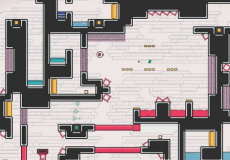




Strange Jigsaws is a puzzle game that approaches the jigsaw format as a framework rather than a fixed rule set. Instead of asking the player to assemble a single image through shape matching, the game presents a sequence of independent challenges, each built around its own internal logic. Puzzles differ in structure, objective, and interaction rules, requiring players to understand how each one functions before attempting a solution. The game focuses on reasoning and observation rather than speed or reflexes.
Puzzle Design Philosophy
Each puzzle in Strange Jigsaws is designed as a self-contained problem. The player is given a set of pieces and a space in which to arrange them, but the condition for completion is not always obvious. Some puzzles resemble traditional jigsaws with altered constraints, while others abandon image assembly entirely in favor of abstract relationships. The game does not provide step-by-step guidance, which places responsibility on the player to identify what defines a correct solution. This structure encourages deliberate analysis instead of trial-based guessing.
Interaction and Logical Process
Player interaction is limited to moving, rotating, and positioning puzzle elements. There are no timers, scores, or penalties for incorrect attempts. This allows players to focus entirely on understanding the puzzle logic. As the game progresses, puzzles may combine multiple conditions at once, increasing the need for structured thinking. The solving process typically involves repeating a small set of actions while refining assumptions about the rules.
Key actions that appear across many puzzles include:
· Studying the initial layout and available pieces
· Testing how pieces interact with each other
· Identifying constraints that prevent completion
· Adjusting placements based on observed feedback
· Confirming when all conditions are satisfied
These actions form a consistent problem-solving loop that rewards careful attention rather than quick execution.
Interface and Player Focus
The interface in Strange Jigsaws is minimal and functional. Visual elements are kept clear so that puzzle components are easy to distinguish. Controls respond precisely, which is important when solutions depend on exact positioning. There are no animated distractions or background systems competing for attention. This design supports sustained concentration and allows players to spend as much time as needed on a single puzzle.
Range of Puzzle Concepts
The game introduces a wide range of puzzle concepts over time. Some challenges rely on spatial balance, others on ordering, alignment, or symbolic relationships between pieces. Because no single mechanic dominates the entire game, players must adapt their thinking regularly. This variety prevents repetition and ensures that previously learned solutions cannot be applied automatically to new puzzles.
Discuss Strange Jigsaws

