

Tales Beyond The Tomb – Route 86
Advertisement
Tales Beyond The Tomb – Route 86 is a short narrative-driven horror game built as a standalone entry within an anthology format. The game presents a self-contained story that unfolds during a road trip along a remote highway. Players experience the events through multiple characters, each placed in a situation where normal travel turns into a sequence of survival-oriented decisions. The structure avoids open-world elements and instead focuses on controlled environments where story progression is tightly connected to player movement and observation.
Advertisement










Similiar games






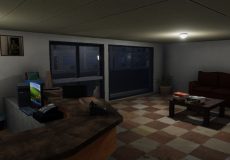


Tales Beyond The Tomb – Route 86 is a short narrative-driven horror game built as a standalone entry within an anthology format. The game presents a self-contained story that unfolds during a road trip along a remote highway. Players experience the events through multiple characters, each placed in a situation where normal travel turns into a sequence of survival-oriented decisions. The structure avoids open-world elements and instead focuses on controlled environments where story progression is tightly connected to player movement and observation.
Narrative Structure and Perspective
The story in Tales Beyond The Tomb – Route 86 is divided into segments that shift between different members of the group. Each segment reveals part of the overall situation and adds context to the events occurring along the route. This perspective switching allows the player to understand the threat from more than one viewpoint. Dialogue, environmental details, and scripted events are used to advance the narrative rather than long exposition. The game does not rely on branching storylines, but player actions can influence how individual moments play out.
Gameplay Approach and Mechanics
Gameplay is presented in a first-person view and emphasizes navigation, awareness, and avoidance. There is no focus on direct combat, and players are often required to move carefully through environments while responding to audio and visual cues. The core gameplay systems include:
· First-person exploration across confined locations
· Stealth-based movement to avoid hostile presence
· Environmental interaction to trigger progression
· Perspective changes between different characters
· Optional microphone detection that reacts to player noise
These mechanics are designed to keep attention on tension management rather than mechanical complexity.
Environmental Design and Pacing
The environments in Route 86 are linear and purpose-built to support pacing. Locations such as roadsides, interiors, and isolated structures are used to control visibility and movement. Lighting and sound play an important role in guiding the player and signaling danger. The game progresses steadily, with limited backtracking and clearly defined objectives that prevent confusion while maintaining pressure on the player.
Presentation and Audio
Visual presentation in Tales Beyond The Tomb – Route 86 is realistic in style, with an emphasis on readability rather than detail density. Character animations and environmental assets are used primarily to support storytelling. Audio design includes ambient noise, character dialogue, and sound cues tied directly to gameplay mechanics. In some situations, silence itself becomes part of the experience, forcing players to monitor their surroundings closely.
Discuss Tales Beyond The Tomb – Route 86

