

CALLUS
Advertisement
CALLUS is a first-person psychological horror game built around exploration inside a domestic interior. The player returns to an apartment connected to the protagonist’s childhood and is free to move through familiar rooms without explicit instructions. The game does not present clear goals or objectives and avoids traditional mechanics such as combat or item collection. Instead, progression is achieved through presence in the space and repeated interaction with the environment. The apartment serves as the only location, and its layout remains mostly consistent throughout the experience.
Advertisement










Similiar games




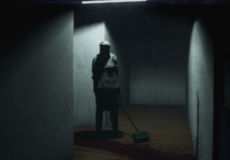
CALLUS is a first-person psychological horror game built around exploration inside a domestic interior. The player returns to an apartment connected to the protagonist’s childhood and is free to move through familiar rooms without explicit instructions. The game does not present clear goals or objectives and avoids traditional mechanics such as combat or item collection. Instead, progression is achieved through presence in the space and repeated interaction with the environment. The apartment serves as the only location, and its layout remains mostly consistent throughout the experience.
Narrative Structure
The narrative of CALLUS is delivered indirectly through environmental changes and spatial repetition. There is no active narration or dialogue system explaining events. Meaning is constructed as the player revisits rooms and notices shifts in objects, lighting, and sound. The story focuses on personal memory and family relationships, particularly the influence of parental care on long-term perception. Scenes are connected by movement rather than by cutscenes, and the player is expected to interpret events without confirmation from the game.
Player Interaction
Interaction in CALLUS is intentionally limited. The player can walk, look around, and trigger events by entering specific areas. There are no puzzles that require logical solutions and no fail states that restart progress. The environment reacts to the player’s actions in subtle ways, encouraging careful observation instead of experimentation. The experience is designed to unfold at a controlled pace, with progression tied to exploration rather than challenge.
Core interaction elements include:
· first-person movement inside a fixed apartment layout
· environmental triggers activated by location
· repeated traversal of the same spaces
· visual and audio changes over time
· absence of interface elements or prompts
These elements form a simple system where attention is the main requirement.
The visual design of CALLUS aims for realism in object placement and room structure, supporting recognition and memory. Lighting is used to indicate transitions between narrative states rather than to guide gameplay. Objects may appear or disappear, altering how familiar rooms are perceived. Audio design relies on ambient sound and directional cues instead of music, helping signal changes without direct explanation. Silence is used as part of the sound structure rather than as empty space.
Discuss CALLUS

