

One Less Choice
Advertisement
One Less Choice is a psychological horror game built around high-risk decision-making and competitive mechanics. The player takes the role of a prisoner trying to escape a controlled environment, where the final challenge is a one-on-one duel that combines elements of Russian roulette, card strategy, and modified Rock–Paper–Scissors rules. The structure focuses on tension, where each decision directly affects survival and progression.
Advertisement








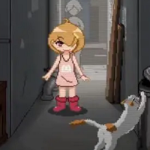
Similiar games
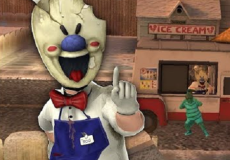

One Less Choice is a psychological horror game built around high-risk decision-making and competitive mechanics. The player takes the role of a prisoner trying to escape a controlled environment, where the final challenge is a one-on-one duel that combines elements of Russian roulette, card strategy, and modified Rock–Paper–Scissors rules. The structure focuses on tension, where each decision directly affects survival and progression.
Core Gameplay And Duel Mechanics
The central gameplay in One Less Choice is based on a turn-based duel system. Players compete against an opponent using a variation of Rock–Paper–Scissors where two choices are made and one is removed before the outcome is revealed. This mechanic introduces uncertainty and requires prediction rather than fixed strategy. Winning rounds allows players to gain control of the turn, while losing increases risk. The duel is integrated with a revolver system, where actions can directly lead to survival or failure.
Card System And Round Progression
The game includes a card system that adds additional layers to each encounter. Cards can modify outcomes, affect the opponent, or change the state of the duel. They are obtained through specific events such as draws or losses, which makes them part of both success and failure. Managing these cards becomes an important part of long-term strategy.
- Rock–Paper–Scissors variation with hidden choice removal
- Turn-based Russian roulette mechanics
- Cards that alter gameplay conditions
- Resource gain through draws and losses
- Single opponent duel structure
Strategy And Risk Management
Success in One Less Choice depends on balancing probability and decision-making. Players must predict the opponent’s behavior while managing limited resources. Choosing when to take risks, such as triggering the revolver or using a card, is critical. Each action can shift the balance of the round, making timing an essential factor.
The game encourages adaptation through repeated rounds. Players learn patterns in outcomes and adjust their strategy accordingly. However, randomness remains a constant element, preventing complete control over the situation.
One Less Choice maintains engagement through its combination of psychological pressure and strategic systems. The confined setting and duel format create a focused experience where each decision has immediate consequences. The integration of chance and planning ensures that each session develops differently, depending on player choices and outcomes.
Discuss One Less Choice

