

Puzzle Games
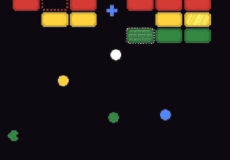
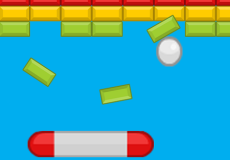

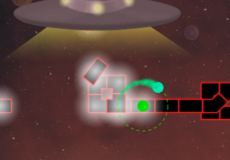



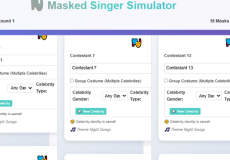
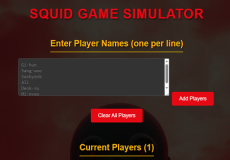
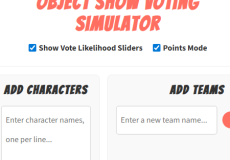

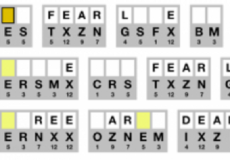
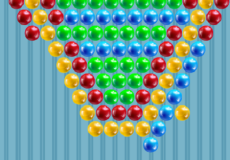




Puzzle Games represent a category of interactive experiences built around problem-solving mechanics and logical reasoning. Titles within this classification prioritize cognitive challenges rather than reflex-based execution or competitive systems. Players typically engage by analyzing patterns, interpreting rules, and manipulating elements within defined constraints. The genre includes a wide range of formats, from abstract logic systems to narrative-integrated challenges. Despite structural differences, the core principle remains consistent: progression depends on the player’s ability to understand and resolve tasks.
Core Gameplay Structure
The gameplay framework of Puzzle Games is centered on rule-driven interaction. Designers establish clear mechanics that define how players can manipulate objects, symbols, or environments. Challenges are constructed to test reasoning, spatial awareness, sequencing, or deduction. Unlike progression systems based on statistics or resource accumulation, advancement occurs through successful task resolution. Difficulty scaling is commonly achieved by increasing complexity rather than introducing mechanical variability.
Puzzle Games frequently emphasize clarity of systems. Players are encouraged to experiment, observe outcomes, and refine strategies based on feedback. This structure supports iterative learning, where failure serves as a mechanism for understanding rules rather than punishment. Many titles adopt minimal interfaces to reduce distractions and focus attention on logical interaction.
Common Mechanics and Systems
Puzzle Games employ various mechanics that shape engagement patterns. Typical gameplay elements include:
- Pattern recognition tasks
- Spatial manipulation systems
- Sequencing and logic chains
- Environmental interaction
- Constraint-based problem solving
These mechanics form the operational backbone of the genre.
Structural Variations and Subgenres
Puzzle Games include multiple structural approaches defined by interaction style. Logic-based puzzles focus on deduction and reasoning. Physics-based puzzles rely on environmental manipulation and simulation systems. Narrative puzzles integrate challenges within story progression. Cooperative puzzles emphasize communication and shared problem-solving. These variations demonstrate how core puzzle principles adapt across different gameplay frameworks while maintaining genre identity.
Player Engagement and Progression
Engagement in Puzzle Games is defined by mental processing and system comprehension. Players advance by identifying solutions rather than improving mechanical skills. Replayability often arises through alternative solutions, procedural generation, or increasing difficulty tiers. The genre supports both short-session play and extended engagement, depending on design structure. Puzzle Games function as a cognition-driven category where logical interaction, rule interpretation, and structured challenges collectively shape the player experience.

