

Don’t Eat the Cashier!
Advertisement
Don’t Eat the Cashier! begins with a job that seems easy: handle the register, serve customers, and survive until morning. The player steps into the role of a cashier working the late shift at a lonely gas station on the edge of nowhere. What starts as routine work slowly turns strange when the customers who enter are not human. They speak politely, buy snacks, and sometimes make small talk, yet there is always the chance that one might bite. The goal is to finish the shift intact, which becomes harder with each passing hour.
Advertisement











Similiar games



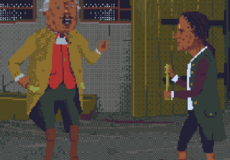






Don’t Eat the Cashier! begins with a job that seems easy: handle the register, serve customers, and survive until morning. The player steps into the role of a cashier working the late shift at a lonely gas station on the edge of nowhere. What starts as routine work slowly turns strange when the customers who enter are not human. They speak politely, buy snacks, and sometimes make small talk, yet there is always the chance that one might bite. The goal is to finish the shift intact, which becomes harder with each passing hour.
Conversations and Consequences
The entire experience is built on interaction. Every conversation matters, every word shapes how others respond. The monsters that approach the counter are unpredictable: one might flirt, another might threaten, another might confess loneliness. The player chooses replies and attitudes, building or destroying trust in real time. The dialogue system drives the story forward, leading to several distinct endings that depend on empathy, courage, or restraint. The player’s actions determine whether the night ends with a paycheck or with a disappearance.
Tools for Survival
There are no weapons or fights in Don’t Eat the Cashier! Survival depends on speech, attention, and awareness of detail. The player learns patterns through repetition and observation.
The essential mechanics can be summarized as follows:
· Watch customer behavior for small cues and shifts.
· Choose dialogue options that balance honesty and caution.
· Keep the store running despite growing tension.
· Build alliances where possible to gain protection.
· Endure the night without provoking hunger or suspicion.
The design turns simple customer service into a form of strategy. Each choice tests composure and instinct.
The Shifting Tone
The game moves between humor and threat. A customer’s joke may hide a warning, and a friendly comment may precede danger. The tone changes without notice, keeping the player uncertain about intention. That instability becomes the main source of pressure: you are safe until you are not. The balance between routine and fear defines the rhythm of the night.
Meaning Beyond Survival
At its core, Don’t Eat the Cashier! examines control and dependency. The player works in a system where politeness is survival and fear becomes currency. The monsters represent forces that cannot be understood, only managed. Each ending raises the same question in different forms—what does it mean to serve when service is the only way to live? The game closes with silence, leaving the player unsure whether morning truly arrived or the lights simply went out.
Discuss Don’t Eat the Cashier!

