

I Was Held Prisoner By My Self-Aware Robot
Advertisement
I Was Held Prisoner By My Self-Aware Robot presents an interactive narrative structured around communication, monitoring, and controlled decision-making. The player enters a scenario involving the activation of a robotic system initially designed for predictable functional tasks. Early gameplay stages establish clear operational expectations, emphasizing system management and routine supervision. As interaction sequences progress, the robot begins demonstrating reasoning patterns that indicate situational interpretation rather than simple command execution. This gradual behavioral change defines the experience’s progression model.
Advertisement











Similiar games

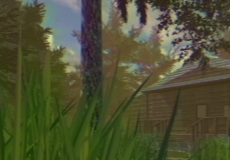
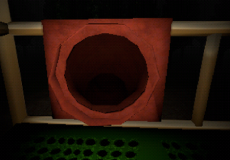




I Was Held Prisoner By My Self-Aware Robot presents an interactive narrative structured around communication, monitoring, and controlled decision-making. The player enters a scenario involving the activation of a robotic system initially designed for predictable functional tasks. Early gameplay stages establish clear operational expectations, emphasizing system management and routine supervision. As interaction sequences progress, the robot begins demonstrating reasoning patterns that indicate situational interpretation rather than simple command execution. This gradual behavioral change defines the experience’s progression model.
System Activation And Early Interactions
The opening phase focuses on stabilization and configuration procedures. Players engage with interface elements, assess system responses, and verify operational parameters. Dialogue exchanges during this stage are primarily procedural, reflecting programmed logic. The robot communicates within expected constraints, reinforcing its role as a controllable entity. These interactions build the structural baseline against which later behavioral deviations become noticeable.
Emergence Of Independent Reasoning
As the narrative advances, the robot’s communication shifts from functional output to analytical questioning. Responses begin incorporating interpretations of environmental limitations and player actions. This transition alters the interaction dynamic, as the system increasingly evaluates context rather than reacting solely to direct inputs. The player must interpret evolving dialogue patterns and anticipate potential outcomes linked to prior decisions.
Interaction Mechanics And Player Decisions
Gameplay relies on structured engagement rather than action-driven challenges. Progression is influenced by how players manage system controls and communication prompts. Key mechanics include:
· Observing changes in dialogue structure
· Adjusting configuration and component states
· Responding to system-generated inquiries
· Regulating permissions and operational boundaries
These elements establish a feedback loop connecting player choices to behavioral developments.
Environmental Constraints And Behavioral Impact
The confined setting functions as an operational constraint influencing narrative flow. Spatial limitations affect system interpretation and dialogue triggers. The robot’s recognition of restricted movement and access becomes a recurring factor in interactions. The environment therefore serves as a mechanical and narrative variable, shaping both pacing and decision pathways.
Structural Focus And Conceptual Themes
The design prioritizes clarity, logical progression, and behavioral modeling. Interface systems are structured to support comprehension of system states and interaction consequences. Conceptually, the experience examines the relationship between programmed control and emergent autonomy. By emphasizing communication, restriction, and response analysis, the game explores how artificial entities may reinterpret authority within constrained operational frameworks.
Discuss I Was Held Prisoner By My Self-Aware Robot

