

Play Things
Advertisement
Play Things is an investigation-based game where the player’s actions are limited to inspection, testing, and classification. The experience takes place in a single controlled space, and each session revolves around examining dolls delivered individually. There is no exploration or movement between locations, and no direct threats appear on screen. Instead, the game builds its structure around routine procedures and the player’s ability to notice inconsistencies through repetition.
Advertisement










Similiar games

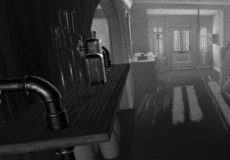
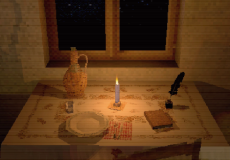


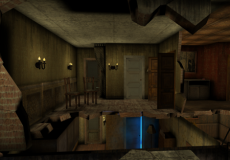
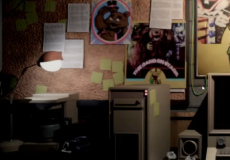

Player Role and Session Structure
At the start of each session, the player assumes the role of an operator responsible for handling incoming objects. The process is intentionally formal and repetitive, reinforcing the idea of procedure over improvisation. Every examination follows the same general flow, which helps establish familiarity. However, familiarity also increases tension, as small deviations become easier to notice. The lack of explicit instruction on correct decisions places responsibility entirely on the player.
Examination Methods and Interaction Limits
Interaction in Play Things is restricted to a defined set of tools and actions. These tools are used to test the object in front of the player rather than to manipulate the environment. The game avoids automation, requiring the player to actively perform and document each step. In the middle of the gameplay loop, the player repeatedly carries out a standard group of examination actions:
- Calling the object by name and listening for response
- Recording audio to identify irregular sound behavior
- Taking photographs to compare visual details
- Measuring temperature to check for abnormal readings
- Applying physical interaction to observe reactions
Each action provides information that must be interpreted rather than confirmed by the system.
Analysis and Classification Process
After completing the required tests, the player must decide how to classify the object. The game does not indicate whether this decision is correct at the time it is made. Some results may appear neutral or contradictory, forcing the player to rely on patterns observed across multiple examinations. This structure encourages long-term comparison rather than isolated judgment, making repeated sessions meaningful even when procedures remain the same.
Play Things does not include levels, scores, or performance indicators. Progress is defined solely by completed examinations and the decisions associated with them. There are no rewards for speed or accuracy as measured by the game. This absence of feedback shifts attention away from optimization and toward consistency and caution.
Presentation and Overall Design Purpose
The visual and audio design of Play Things is restrained and functional. The environment remains largely unchanged, allowing minor variations to stand out more clearly. Sound cues and visual feedback are subtle, supporting focus rather than distraction. Overall, Play Things functions as a procedural horror experience driven by routine and uncertainty. By limiting player actions and removing explicit validation, the game places full responsibility on observation and interpretation, making the process itself the source of tension rather than scripted events.
Discuss Play Things

