

Untime
Advertisement
Untime is a short narrative game that places the player in the role of Circe, a woman who leaves behind her past in search of a new beginning. She travels from the city to a small town called Dugo, hoping for peace, but soon finds herself surrounded by strange events that challenge her sense of time and memory. The story is built to be experienced in one sitting, giving the player a compact but complete journey.
Advertisement










Similiar games




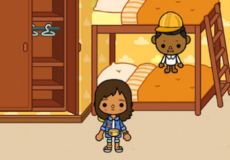

Untime is a short narrative game that places the player in the role of Circe, a woman who leaves behind her past in search of a new beginning. She travels from the city to a small town called Dugo, hoping for peace, but soon finds herself surrounded by strange events that challenge her sense of time and memory. The story is built to be experienced in one sitting, giving the player a compact but complete journey.
Story And Direction
The central focus of Untime is Circe’s attempt to rebuild her life after a difficult event. In Dugo, everyday details of her new environment begin to feel unsettling, hinting that her past is not as far behind as she hoped. The game uses themes of time, inevitability, and consequence, raising questions about whether change is truly possible or whether some events remain fixed no matter how far one runs from them.
Gameplay And Features
The design of Untime relies on simplicity. It uses a first-person view to keep the player close to Circe’s experience. The game has a short duration, making it accessible for players who want a complete story in a limited timeframe. While the mechanics are minimal, the narrative is reinforced through exploration, environmental details, and small interactive moments. The experience contains mature content, with visual elements that may be disturbing.
Notable features include:
- A fifteen-minute story designed for one session.
- A first-person perspective for immersion.
- Narrative focus with light interaction.
- Mature themes, including horror elements and gore.
Presentation And Atmosphere
Untime combines audio, visuals, and text to create a layered experience. The player moves through environments that appear quiet at first, but subtle changes in sound and lighting build tension. The town of Dugo is a backdrop and a key part of the storytelling, as its streets and spaces reflect the inner conflict Circe faces. The style blends ordinary surroundings with surreal touches, emphasizing the theme of time slipping away or bending.
Interpretation And Meaning
By the end, Untime leaves players with questions rather than simple answers. The conclusion highlights the struggle between wanting to move forward and being unable to escape the past. This tension is central to Circe’s story, but it also resonates more broadly as a reflection on human memory and regret. Despite its short length, Untime delivers an experience that invites thought and discussion, showing how even small games can explore large ideas about time, loss, and personal change.
Discuss Untime

